Kasuri methi: what it is and how to use it
Updated
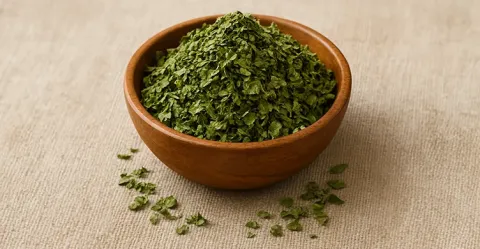
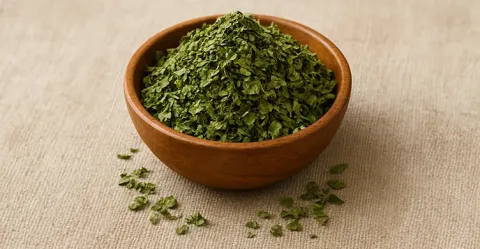
Kasuri methi is dried fenugreek leaves. It takes its name from Kasur, the district in Punjab whose fields have grown fenugreek for generations, and it is the secret behind the aroma of a good karahi, butter chicken or daal makhani.
Kasuri methi, fresh methi and methi dana
All three come from the same plant, but they are used differently:
- Fresh methi (green leaves) is cooked as a vegetable, for example in aloo methi or methi chicken.
- Kasuri methi (dried leaves) is used like a herb. A small amount adds a warm, slightly bitter, savoury fragrance.
- Methi dana (seeds) is a spice, usually fried in oil at the start of cooking or used in pickles (achar).
How to use Kasuri methi
- Crush it. Rub the dried leaves between your palms over the pot. This releases the oils that carry the aroma.
- Add it at the end. Stir it in during the last few minutes of cooking, so the fragrance isn't cooked away.
- Use a little. About one teaspoon is enough for a curry that serves four. Too much turns bitter.
For a stronger aroma, warm the leaves in a dry pan for a few seconds before crushing them. Don't let them darken.
Dishes that need Kasuri methi
- Chicken karahi and mutton karahi
- Butter chicken and makhani gravies
- Daal makhani, daal chana and other lentils
- Aloo, gobhi and mixed sabzi
- Keema and seekh kebab mixes
- Paratha, naan and roti dough: one teaspoon kneaded in
How to choose good Kasuri methi
Good Kasuri methi is green rather than brown, smells strong as soon as you open the pack, and is clean of thick stems, dust and sand. Faded, brown leaves have lost most of their flavour.
How to store it
Keep Kasuri methi in an airtight jar, away from sunlight and the stove's heat. Use a dry spoon. Stored this way it keeps its colour and aroma for months.